Launch offer — valid today only

📄 Digital book in PDF · read it on your phone or print it

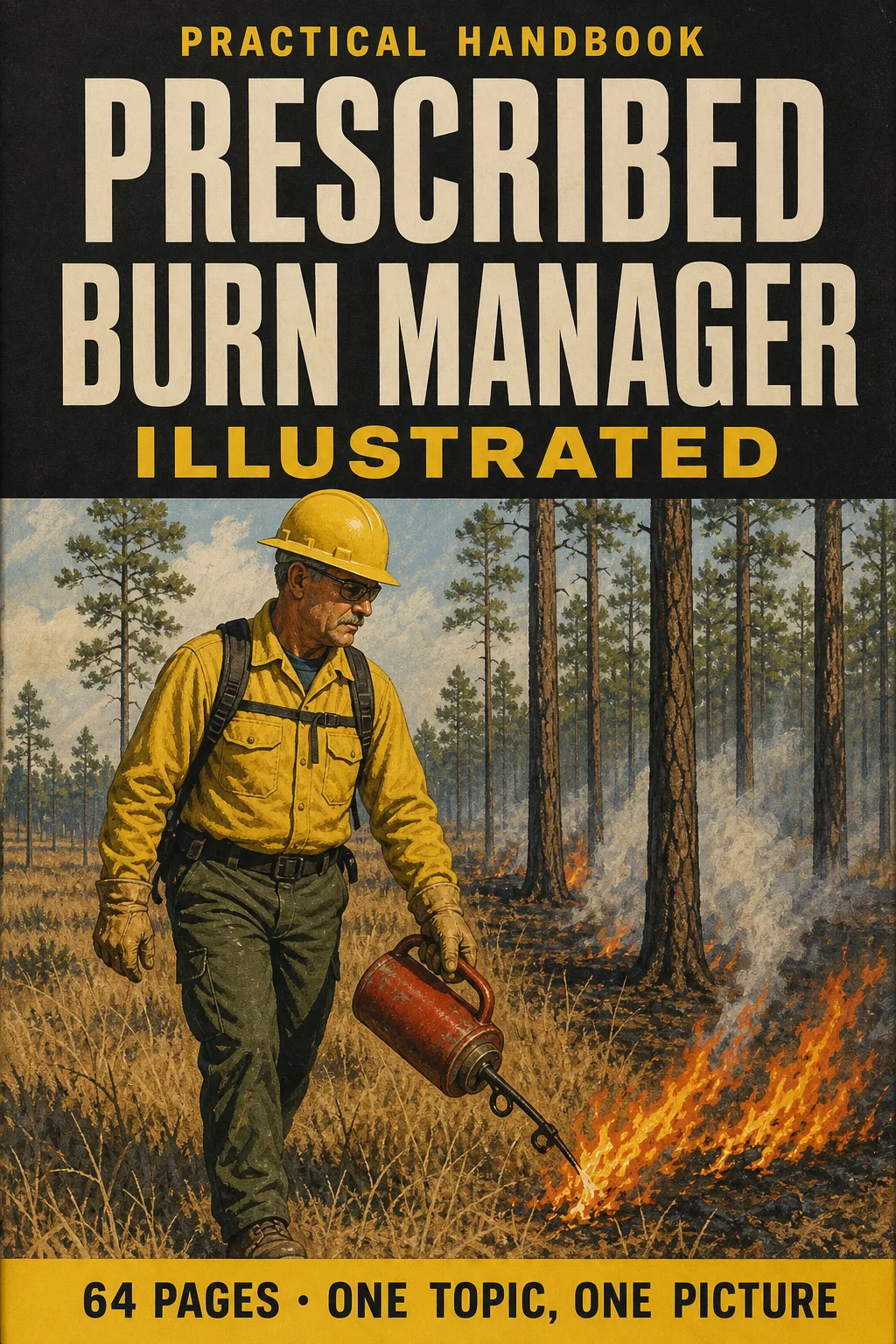
Study for Your Burn Manager Exam with Drawings Read the Weather, Write the Plan, Hold the Line: One Topic per Page

Fire weather, the burn plan, firing patterns, holding and smoke: one topic per page. The drawing first, then the numbers and steps to remember. For the state burn manager exam and for burn day. 64 illustrated pages.

I WANT MY ILLUSTRATED BURN BOOK

🔒 Secure checkout · PDF by email · 30-day guarantee

Every topic, its own pageEach step of the burn drawn, with the explanation beside it
64 illustrated pages64 illustrated pages in 9 parts, from the fire triangle to the exam-day review sheet
Up-to-date sourcesBuilt on NWCG PMS 484 and the Smoke Management Guide; state rules flagged to check
PDF by emailFormat

Look Inside the Book

Every page has one big drawing and a box with the numbers, rules and steps you need to know:

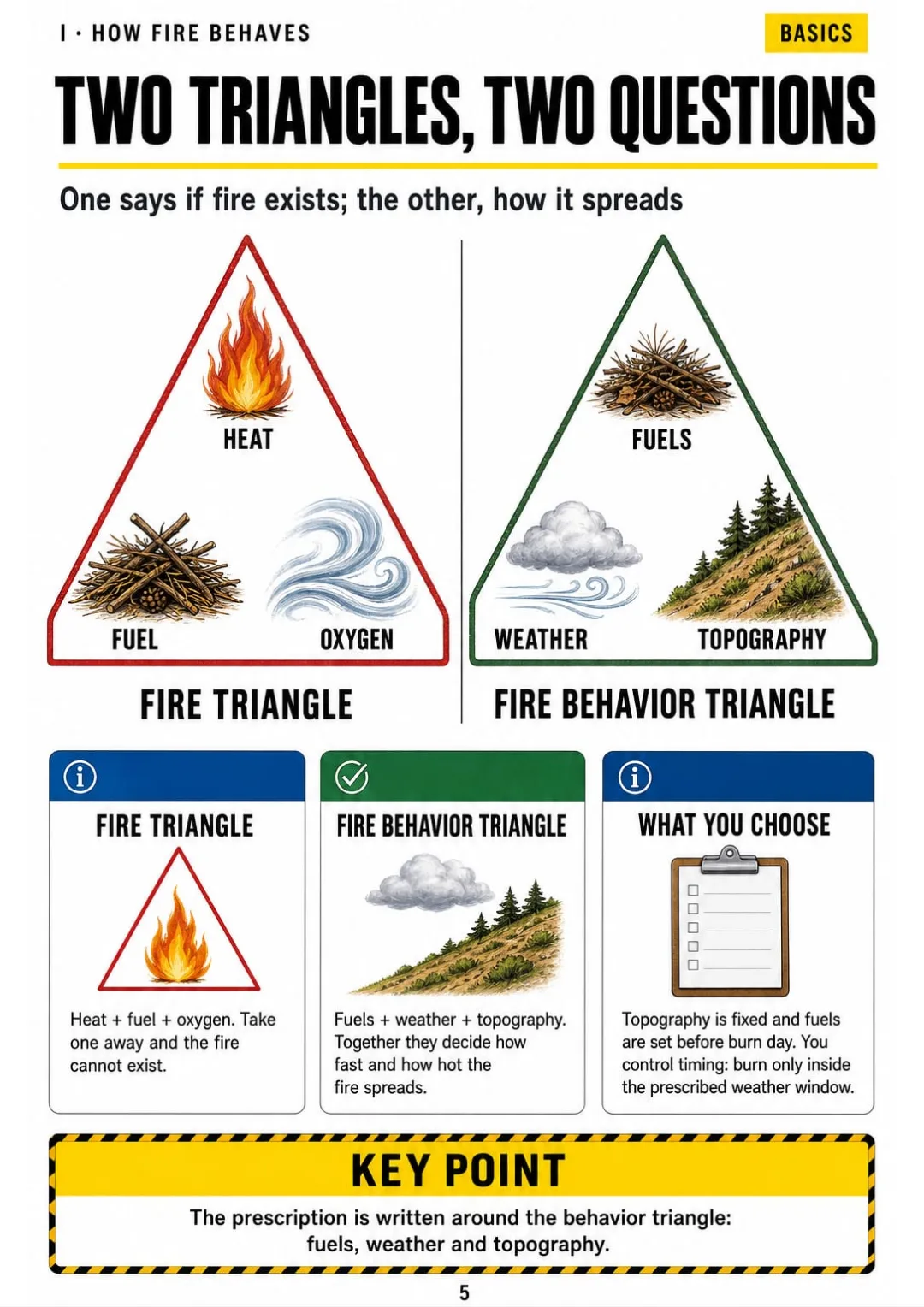
Fire triangle = heat + fuel + oxygen · Behavior triangle = fuels + weather + topography
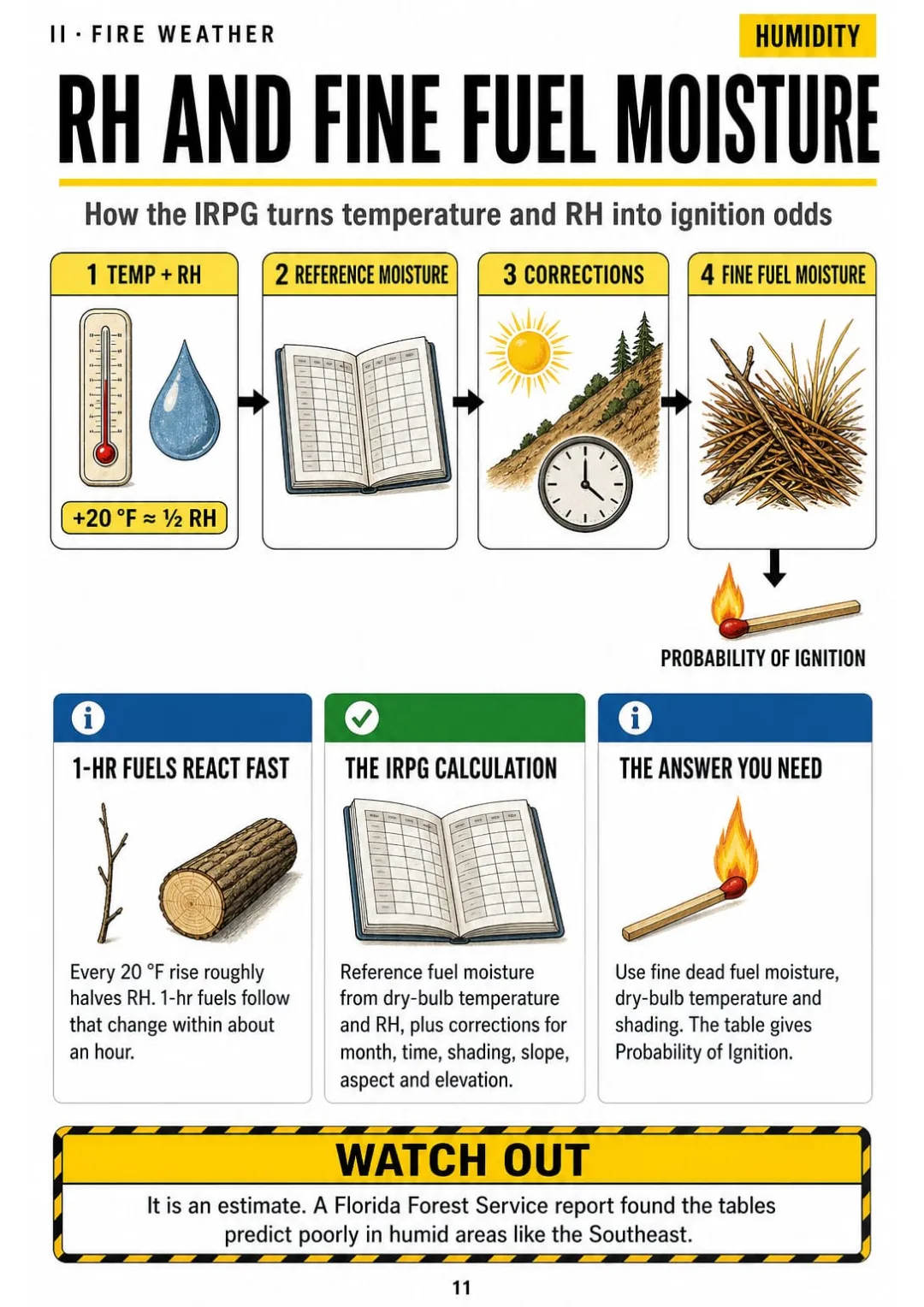
Temp + RH → reference moisture → corrections → fine fuel moisture → probability of ignition
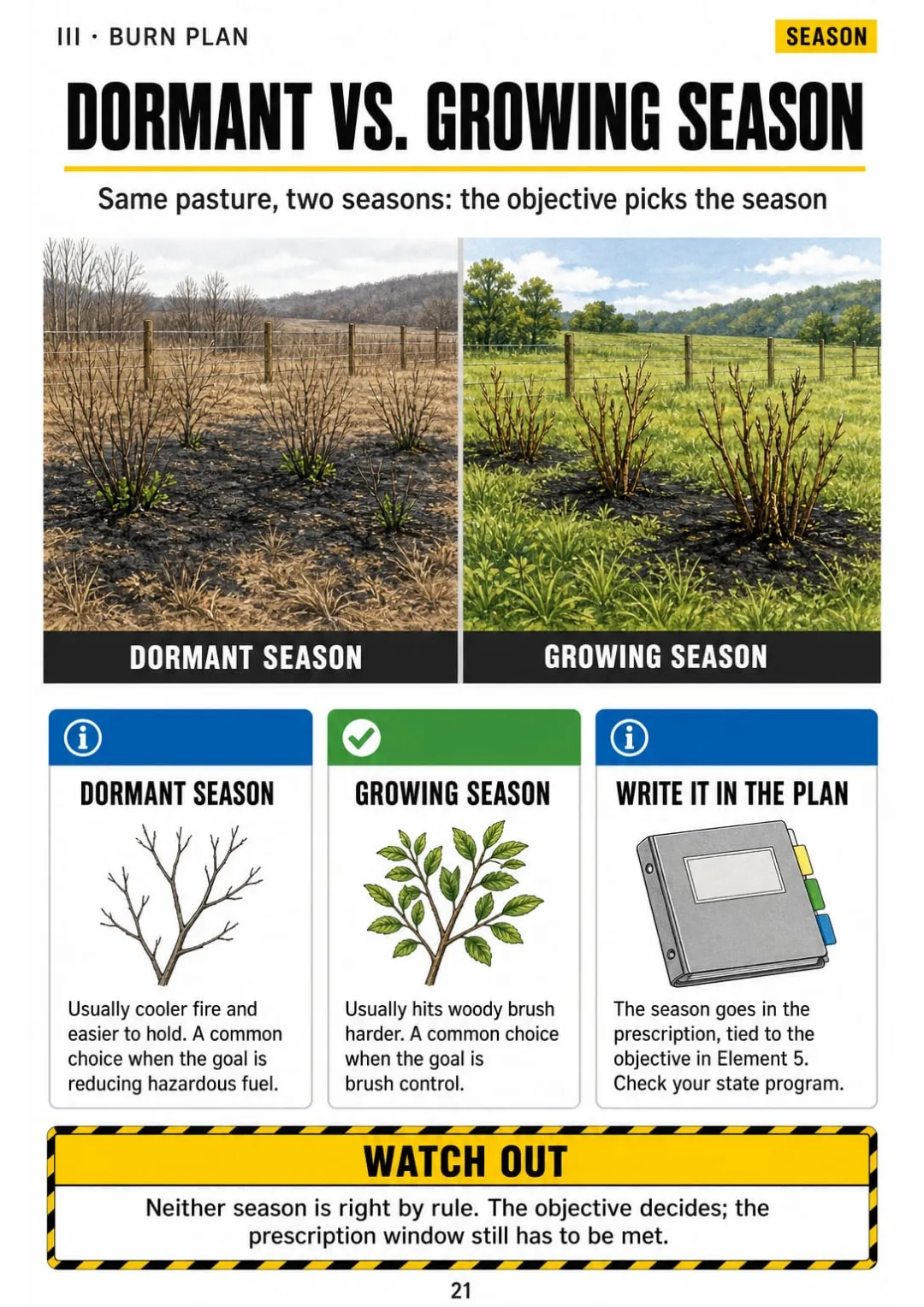
Dormant season: usually cooler and easier to hold. Growing season: harder on woody brush.
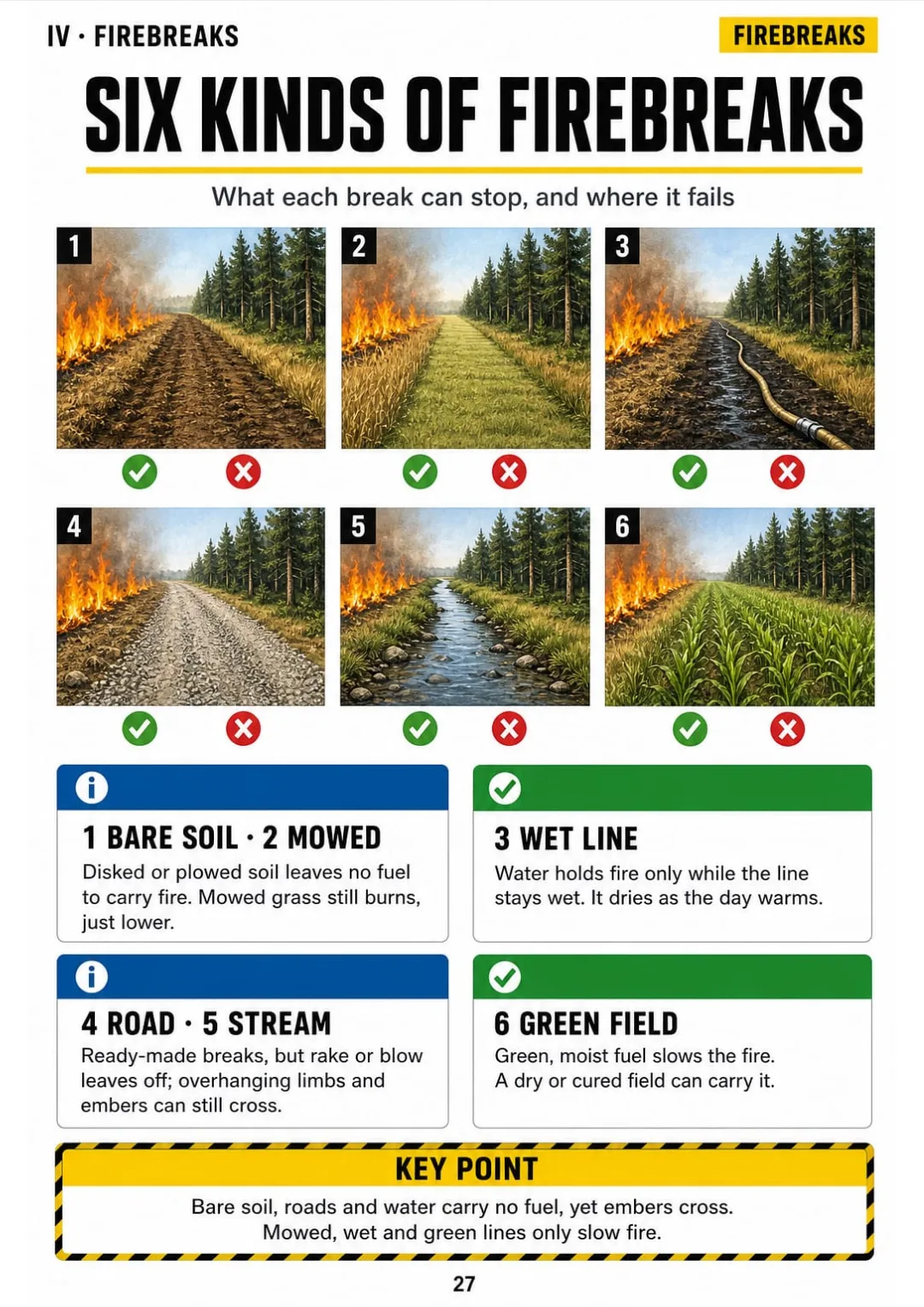
Bare soil, mowed, wet line, road, stream, green field: what each one holds
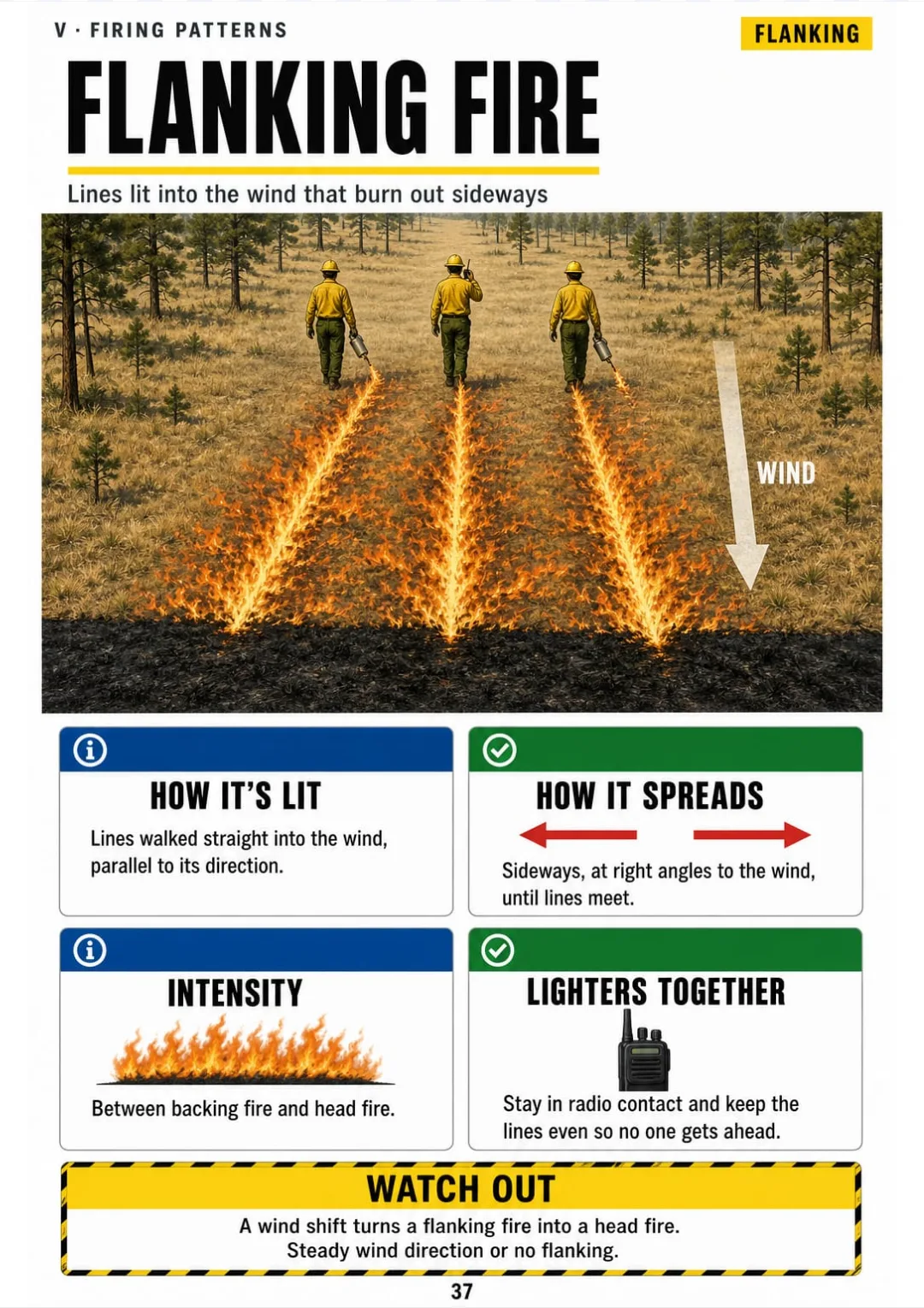
Flanking fire: lit parallel to the wind, spreads sideways, a shift makes it a head fire
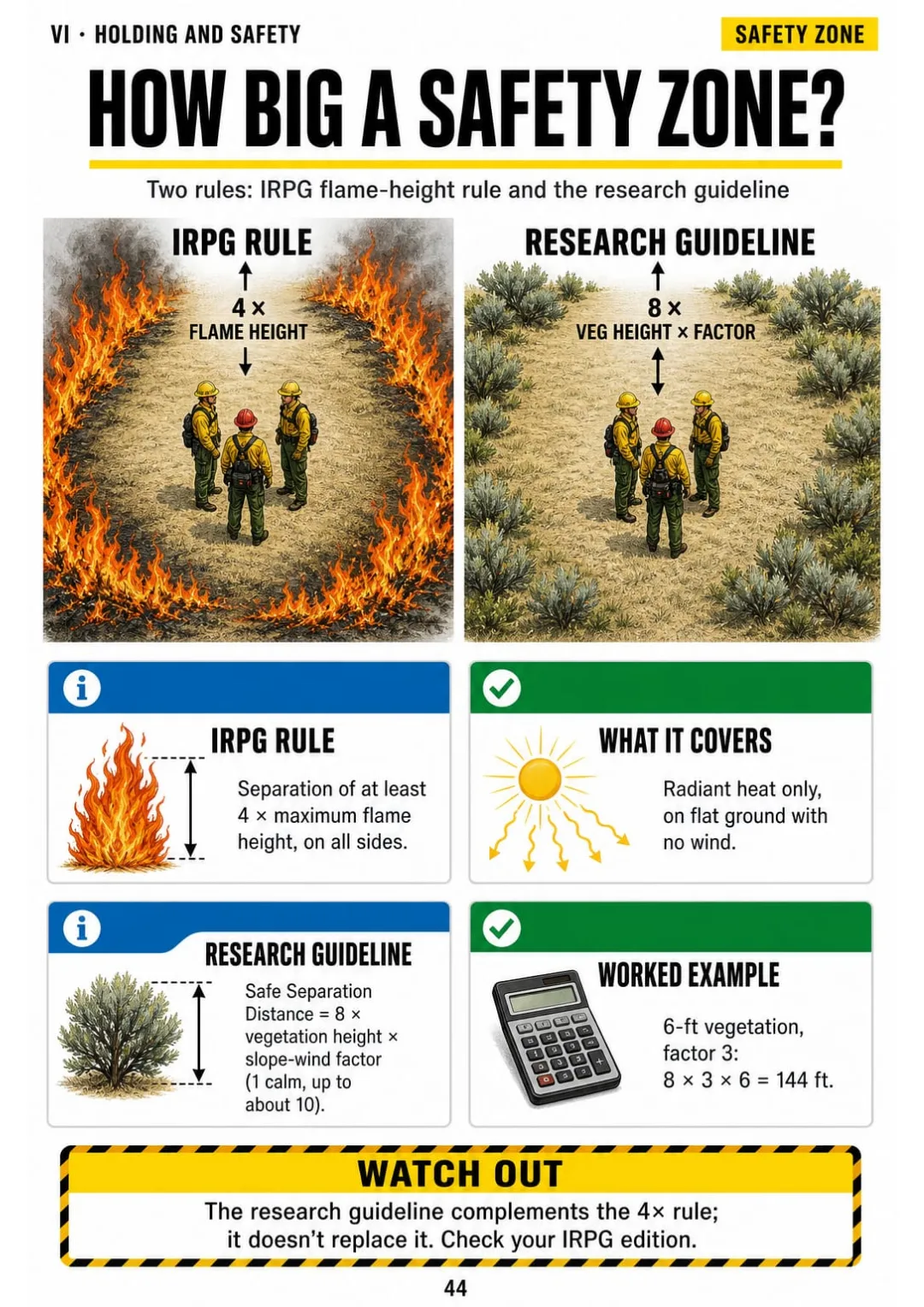
Safety zone size: 4 × flame height (IRPG) next to SSD = 8 × vegetation height × factor.
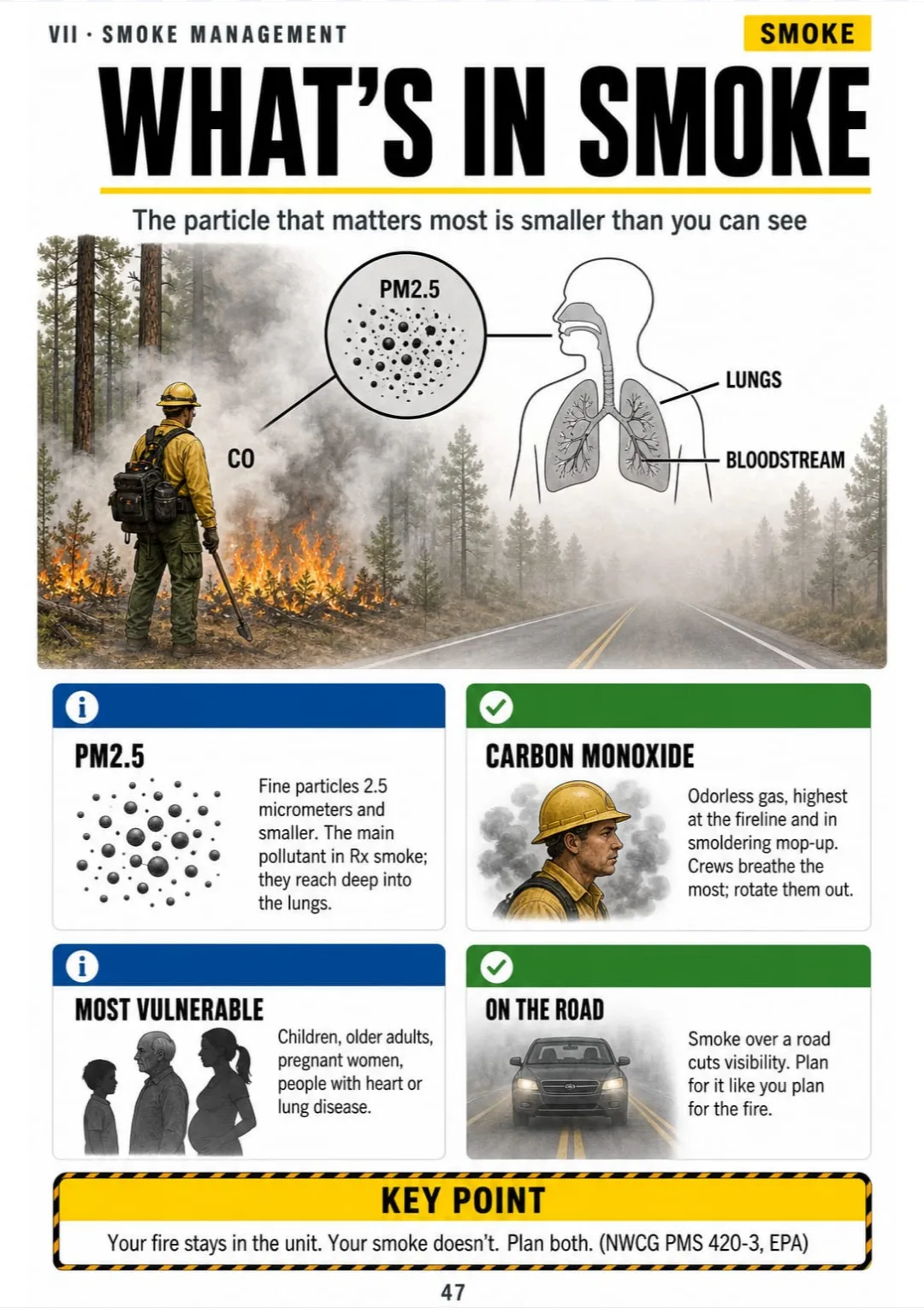
PM2.5: 2.5 micrometers and smaller, deep into the lungs, the main pollutant in Rx smoke.
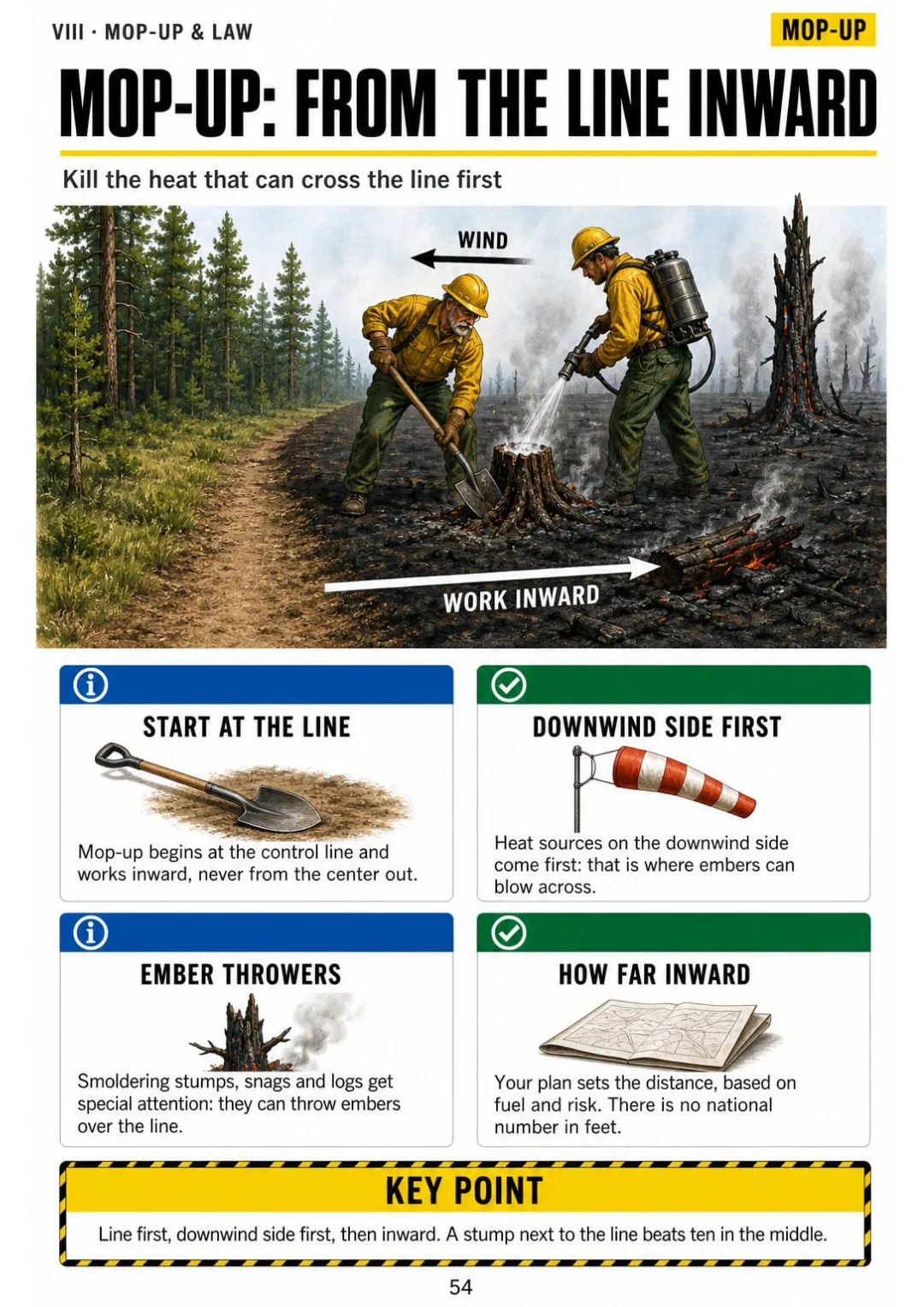
Mop-up order: control line → downwind side → stumps, snags and logs → inward

Swipe to see more →

These are real pages from the book. The table of contents is the full one: 9 parts and 60 topics.

The Problem Isn't You. It's How It Was Explained to You.

You're filling out a burn plan for your own pasture, and the first box asks for the objectives. You write "clear the brush." The instructor hands it back: not measurable.

The binder covers it in two dense paragraphs about objectives, prescriptions and parameters. Nothing shows you which one comes first or how they connect.

Dormant season: usually cooler and easier to hold. Growing season: harder on woody brush.

In the book, the objective gets its own page. First the measurable objective, then the prescription written to meet it, drawn as one line from what you want on the ground to the conditions that get you there, with PMS 484, Element 5, in a box.

The rest works the same way: fine fuel moisture, mixing height, the test fire, the holding crew and mop-up. Each one has its own page.

You write the objective first and the prescription second, in the right order. And when you go back to the binder, you know what you're looking for.

COMPARE FOR YOURSELF

The Same Topic, Two Ways to Study It

THIS
  • The binder: line after line
  • Fuel moisture explained only in words
  • You walk into the exam with doubts
Fine dead fuel moisture is determined by first obtaining the dry-bulb temperature and relative humidity at the site, from which a reference fuel moisture value is derived by means of the appropriate table. This reference value must subsequently be adjusted through the application of correction factors accounting for month, time of day, shading, aspect and slope, as well as the position of the fuels relative to the point of observation. The resulting fine dead fuel moisture is then employed to estimate the probability of ignition.
FOR THIS
  • Fine fuel moisture in one drawing
  • The steps from temp and RH in a box
  • Day and night corrections in two separate tables
Temp + RH → reference moisture → corrections → fine fuel moisture → probability of ignition
CONTENTS

Take a Look at the 9 Parts and 60 Topics

How fire behaves, fire weather, prescription and burn plan, firebreaks and equipment, test fire and firing patterns, holding and safety, smoke management, mop-up and the law, and a final review: 64 pages, all illustrated.

IHow Fire Behaves · pp. 5-10
  1. The fire triangle vs. the fire behavior triangle
  2. Head, flank and back of a fire
  3. Flame length tells you intensity
  4. Rate of spread: what speeds a fire up
  5. Slope and aspect
  6. Fuels by size: 1-hr to 1000-hr
IIReading the Fire Weather · pp. 11-19
  1. Relative humidity and fine fuel moisture
  2. Taking RH with a belt weather kit
  3. 20-ft wind, eye-level wind, midflame wind
  4. Wind direction and wind shifts
  5. Cold fronts: burn behind, not ahead
  6. Atmospheric stability and inversions
  7. Mixing height and transport wind
  8. Dispersion index
  9. Drought and the KBDI
IIIPrescription and Burn Plan · pp. 20-26
  1. Start with the objective
  2. Dormant season vs. growing season burns
  3. Writing the prescription window
  4. The elements of a burn plan
  5. Drawing the burn unit map
  6. Contingency plan: when it slops over
  7. Go/no-go: the last decision
IVFirebreaks and Equipment · pp. 27-32
  1. Types of firebreaks
  2. How wide should the line be
  3. Prepping the line: snags and heavy fuels
  4. The drip torch
  5. Water and holding equipment
  6. Personal protective equipment
VTest Fire and Firing Patterns · pp. 33-40
  1. The test fire
  2. Black line first: always start downwind
  3. Backing fire
  4. Strip-head fire
  5. Flanking fire
  6. Point source (spot) ignition
  7. Ring (perimeter) fire
  8. Choosing the pattern for your unit
VIHolding and Safety · pp. 41-46
  1. The holding crew's job
  2. Spot fires and spotting distance
  3. LCES: lookouts, communications, escape routes, safety zones
  4. Safety zone size
  5. Crew briefing
  6. Trigger points: when to stop lighting
VIISmoke Management · pp. 47-53
  1. What's in smoke and why it matters
  2. Smoke-sensitive areas
  3. Plotting the smoke trajectory
  4. Daytime vs. nighttime smoke
  5. Smoke plus fog: superfog
  6. Reducing smoke impact
  7. Notifications
VIIIMop-Up, Patrol and the Law · pp. 54-59
  1. Mop-up: work from the line inward
  2. Patrol: how long to watch
  3. Declaring the burn out
  4. Records after the burn
  5. Certified burn manager: what the certification gives you
  6. Permits, authorizations and burn bans
IXReview and Common Mistakes · pp. 60-64
  1. The whole burn in 8 steps
  2. Fire weather terms side by side
  3. Common mistakes in the burn plan
  4. Common mistakes on burn day
  5. Exam-day review sheet

One Page, One Topic, All Clear

Think of it this way:

It's burn morning. The spot forecast gives you mixing height and transport wind, and you need to know if the smoke will lift and move off or settle over the highway.

You open the page on mixing height and transport wind and see the smoke column drawn rising to the mixing height and then carried off by the transport wind, with what to check in a box beside it.

Flanking fire: lit parallel to the wind, spreads sideways, a shift makes it a head fire

Same for the test fire, backing and strip-head fire, the holding crew, superfog and mop-up: each one on its own page.

Prescribed Burn Manager Illustrated is 9 parts and 60 topics, all drawn, and it closes with the whole burn in 8 steps, the most common mistakes and an exam-day review sheet.

What you see drawn, you don't have to memorize.

What's Inside Prescribed Burn Manager Illustrated:

Ipp. 5-10

How Fire Behaves

The two triangles, head, flank and back of a fire, flame length, rate of spread, slope and aspect, and fuels from 1-hr to 1000-hr.

IIpp. 11-19

Reading the Fire Weather

RH and fine fuel moisture, the belt weather kit, the three winds, wind shifts, cold fronts, stability and inversions, mixing height, transport wind, dispersion and the KBDI.

IIIpp. 20-26

Prescription and Burn Plan

Objectives first, dormant vs. growing season, the prescription window, the elements of a burn plan, the unit map, the contingency plan and the go/no-go.

IVpp. 27-32

Firebreaks and Equipment

Six kinds of firebreaks, line width, prepping snags and heavy fuels, the drip torch, water and holding equipment, and PPE.

Vpp. 33-40

Test Fire and Firing Patterns

The test fire, black line first, backing, strip-head, flanking, point source and ring fire, and how to choose the pattern for your unit.

VIpp. 41-46

Holding and Safety

The holding crew's job, spot fires and spotting distance, LCES, safety zone size, the crew briefing and trigger points.

VIIpp. 47-53

Smoke Management

What's in smoke, smoke-sensitive areas, plotting the trajectory, daytime vs. nighttime smoke, superfog, reducing impact and notifications.

VIIIpp. 54-59

Mop-Up, Patrol and the Law

Mop-up from the line inward, how long to patrol, declaring the burn out, records, what certification gives you, and permits and burn bans.

IXpp. 60-64

Review and Common Mistakes

The whole burn in 8 steps, fire weather terms side by side, common mistakes in the plan and on burn day, and an exam-day review sheet.

At the end of the book: The whole burn in 8 steps, fire weather terms side by side, common mistakes and an exam-day review sheet.
Plus: 2 Free Books

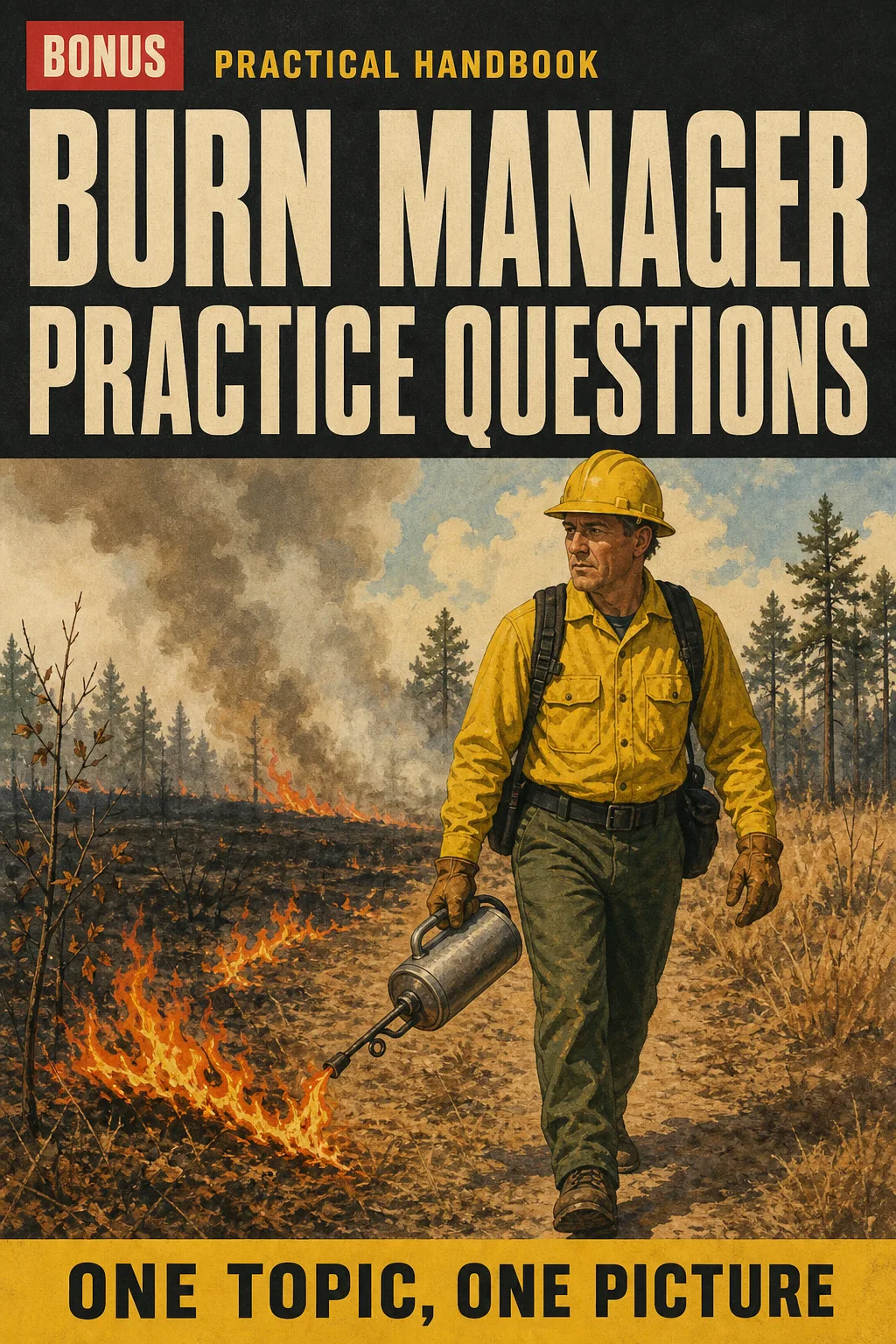
Burn Manager Practice Questions

BONUS 1: «Burn Manager Practice Questions»

Value on its own: US$ 17.90

Exam-style questions with answers and a short why for each, so you find out what you don't know before the exam does.

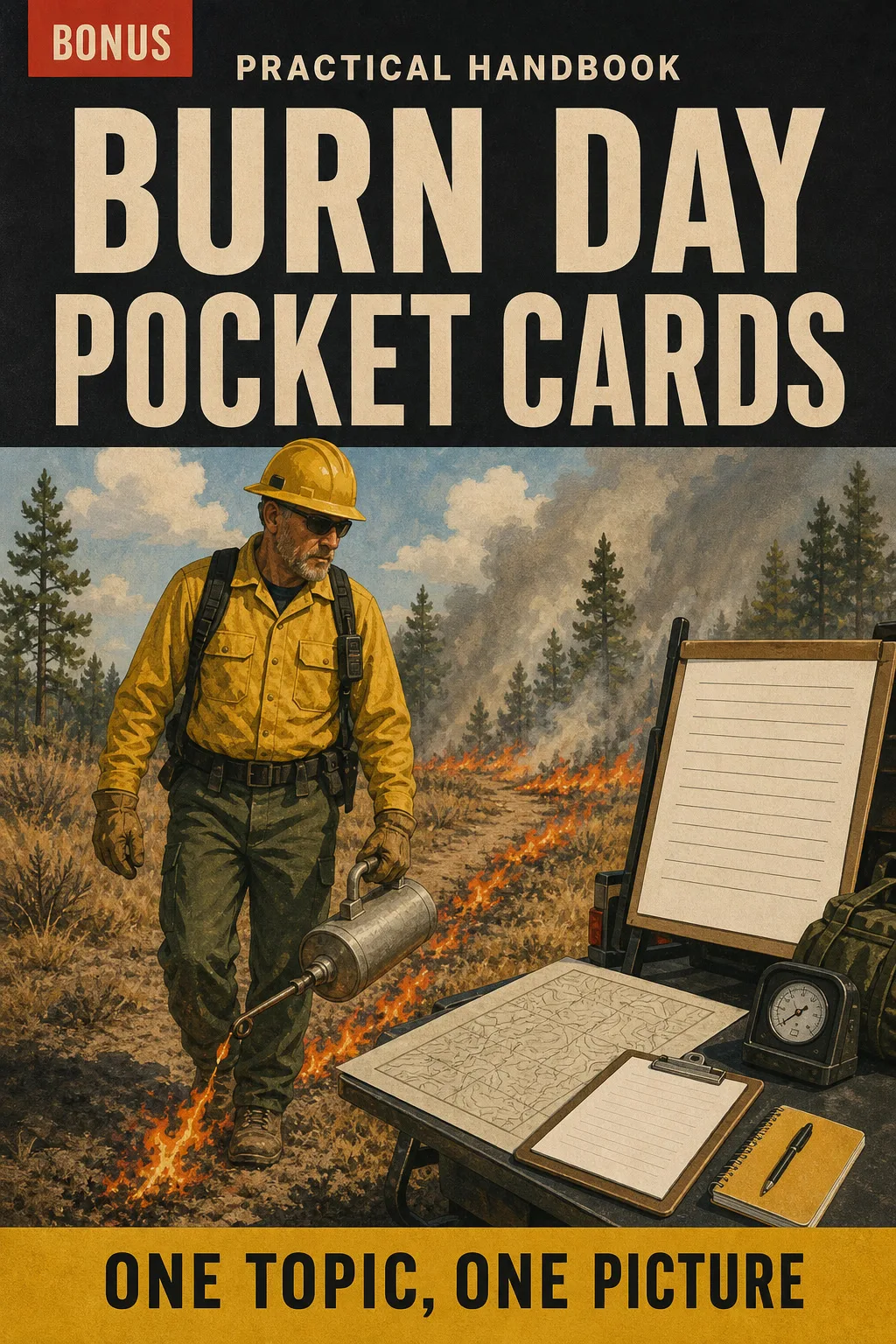
Burn Day Pocket Cards

BONUS 2: «Burn Day Pocket Cards»

Value on its own: US$ 14.90

Fire weather terms, firing patterns and go/no-go checks on printable cards, for a quick review before you light the first strip.

Prescribed Burn Manager Illustrated with 2 Free Books

  • Prescribed Burn Manager Illustrated: 64 illustrated pagesUS$ 63
  • BONUS 1: Burn Manager Practice QuestionsUS$ 17.90
  • BONUS 2: Burn Day Pocket CardsUS$ 14.90
  • High-resolution PDF to printIncluded
Total value US$ 95.80
YOUR PRICE:
US$ 27
You save US$ 68.80
YES, I WANT PRESCRIBED BURN MANAGER ILLUSTRATED FOR US$ 27

📄 This is a digital PDF book sent to your email: nothing is printed or shipped.

Secure purchaseEncrypted payment30-day guarantee

PDF by email: We email you Prescribed Burn Manager Illustrated as a PDF, together with the two free books. It's a single payment: no installments, no extra charges.

Who This Book Is For

You're taking the state course

You're taking the state course

The binder makes sense once you see it drawn: fire weather, the burn plan and firing patterns, one page each, always in the same order.

Your exam is coming up

Your exam is coming up

You review the whole burn in 8 steps, work through the practice questions and find out what you don't know before the exam does.

You already burn

You already burn

Print it, keep it in the truck and go over the go/no-go, the test fire and the holding plan before you light the first strip. And give your crew the same picture.

Everything You Get Today

US$ 95.80US$ 27
YES, I WANT PRESCRIBED BURN MANAGER ILLUSTRATED FOR US$ 27

📄 This is a digital PDF book sent to your email: nothing is printed or shipped.

30DAYS
GUARANTEE

30-Day Guarantee

Try Prescribed Burn Manager Illustrated for 30 days, bonus books included.

We refund everything if the file won't open, if the book isn't what you see here, if you were charged twice or if the email doesn't arrive. Just email us.

You pay once. No subscriptions.

Frequently Asked Questions

Is it for me if I've been burning for years without certification?

Yes. It doesn't teach you to light a fire from scratch: it puts what you already do in the order the course asks for, from the prescription to patrol, with the weather and the burn plan drawn.

Where does the content come from?

From the NWCG guides (PMS 484 and the Smoke Management Guide for Prescribed Fire), the NWCG Incident Response Pocket Guide and National Weather Service fire weather products. Prescription ranges and legal rules are flagged so you can check them against the current edition of your state program.

Is this official material?

No. It's an independent illustrated study book. No state agency, forestry service or certifying program issues or endorses it.

Does it replace the state course?

No. You still need your state's certified prescribed burn manager course and its manual. The book doesn't certify you: only your state program does. On burn day, the burn boss's judgment on site comes first. This book helps you study and review.

Are the practice questions the ones on the exam?

No. They're written for this book in exam style, each with the answer and a short why. They are not official questions from any exam.

When and how does it arrive?

The book and the 2 gifts arrive as PDFs by email, at the address you enter at checkout.

Does it work for my state (Texas, Florida, Georgia, Oklahoma…)?

Fire behavior, fire weather, the burn plan, firing patterns, holding, smoke and mop-up work the same in every state. What changes is the law: certification requirements, permits, burn bans and liability. Those pages are flagged so you check them against your state's program and its manual.

Can I have it on paper?

We don't ship a printed copy. It's a PDF ready to print, at home or at a print shop: the whole book or just the pages you want to keep in the truck.

How does the refund work?

You have 30 days. We refund everything if the file won't open, if the book isn't what you see on this page, if you were charged twice or if the email doesn't arrive: just email us.

Before You Close This Page

No more rereading the binder with nothing sticking.

Mixing height and transport wind: you see them drawn, and that's it.

You walk into the exam knowing where everything is.

Drawings make studying faster.

The book is right below.

One-time payment: US$ 27 · Guarantee: 30 days · PDF by email

YES, I WANT PRESCRIBED BURN MANAGER ILLUSTRATED FOR US$ 27

📄 This is a digital PDF book sent to your email: nothing is printed or shipped.